

Sent, Still
Why God still calls and sends from the UK Baptist family — and why short-term mission still matters
This paper argues one simple thing: God has not stopped calling and sending people from these islands. The centre of gravity of the world church has moved south — gloriously so — but that is a reason for the UK Baptist family to lean in, not to stand down. Sending young adults on short-term mission is neither colonial nostalgia nor a slight on our brothers and sisters in the Global South. Rightly framed, it is exactly what a polycentric church looks like: from everywhere to everywhere.
"See, I am doing a new thing! Now it springs up; do you not perceive it?"
ISAIAH 43:19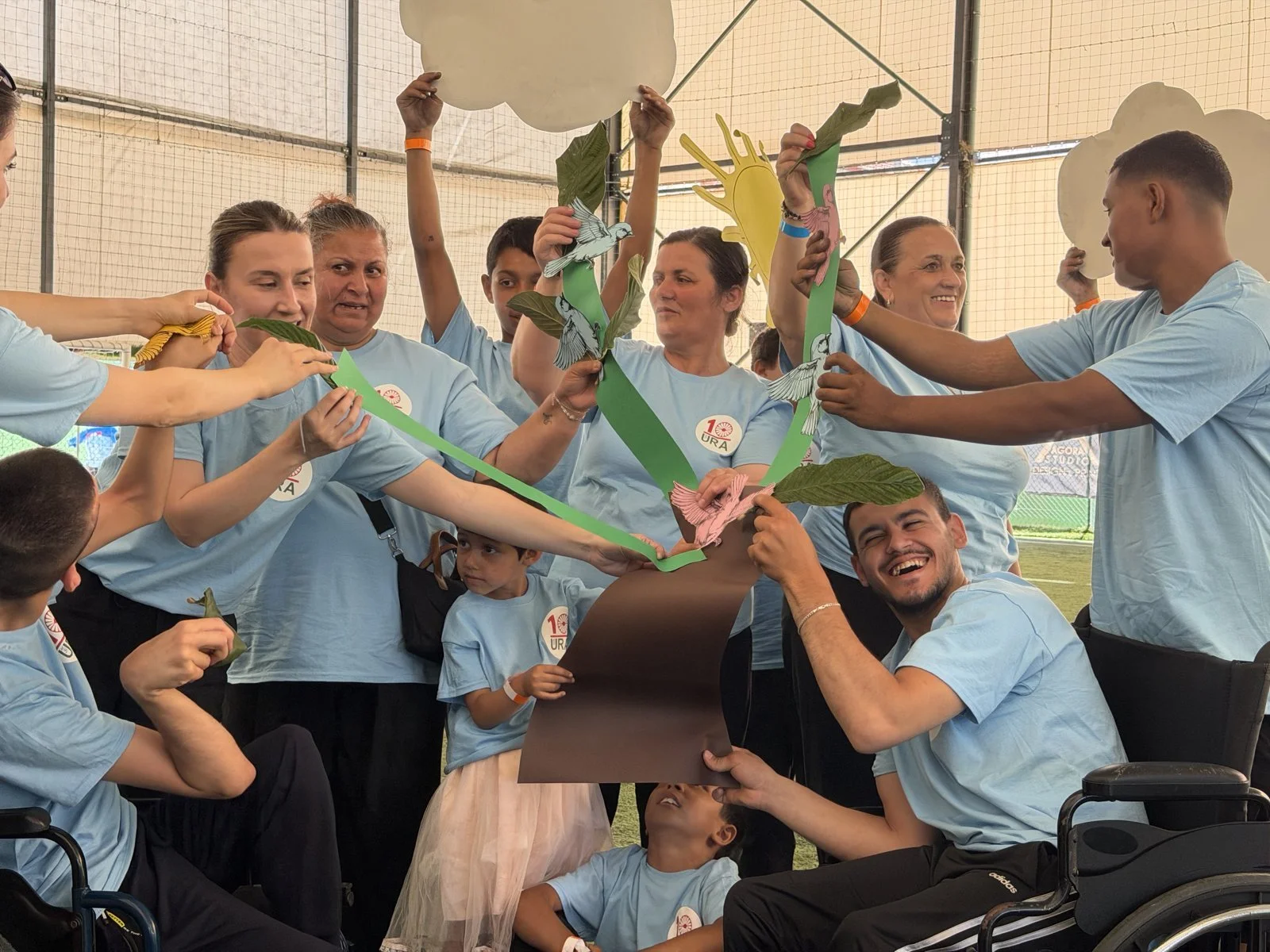
Behind that claim stands a conviction older than any mission strategy: mission is God's before it is ours. The Father who sends the Son, and the Son who sends the Spirit, sends the church — and no shift in the world church's centre of gravity, and no local success, dissolves that sending. The moment is unusually ripe. A generation of young adults is stirring toward faith. Short-term mission — done humbly, reciprocally, and in real partnership — is one of the most reliable on-ramps we have into lifelong discipleship, calling, and, for many, coming to faith itself. And the most strategic mission field is not far away. It is Europe, on our own doorstep.
The map has changed — and that is good news
Let us start by naming what God has done. In 1900 the majority of the world's Christians lived in the Global North. Today around 69% of all Christians live in the Global South, a figure projected to reach roughly 78% by 2050. Africa became the continent with the most Christians in 2018. Our own Baptist family reflects the same story: the Baptist World Alliance now gathers some 53 million baptised believers in around 178,000 churches across 138 countries — the seventh-largest Christian communion on earth, and most of its growth is in the South and East.
This is answered prayer. For two centuries the British Baptist family prayed and gave and went so that the gospel would take root in every nation. It has. The African, Asian and Latin American churches are now vast, confident, and themselves sending. None of this diminishes the North's call to send. It reframes it.
"A church that rejoices in the Global South's strength but concludes it therefore has nothing left to give has misread both the map and the Master's commission."
"From everywhere to everywhere": the North still sends
Mission scholars now describe the church as polycentric — many centres, sending and receiving in every direction. The Lausanne Movement's recent research puts it starkly: with the single exception of Europe, every region of the world now both sends and receives more missionaries than it did fifty years ago, and a growing share of the world's missionaries come from countries where Christians are a minority.
Two things follow for us. First, sending is no longer a one-way street from a 'Christian' North to a 'needy' South — so the old anxiety that sending is inherently colonial loses much of its force in a genuinely reciprocal, partnership model, though the asymmetries of money, mobility and the visitor's gaze never wholly disappear and must be named and watched. Second, the same research shows that most cross-cultural workers today still go to places where the church already exists — "reaching the reached." The unfinished task remains, and it still needs labourers. Every branch of the family is called to raise and release them. That includes us.
The Baptist instinct here is old and deep. It was a Northamptonshire Baptist minister, William Carey, whose 1792 vision and the founding of the Baptist Missionary Society helped ignite the modern Baptist missionary movement, with the watchword: "Expect great things from God; attempt great things for God." That flame was lit on our doorstep. It has not gone out.
Europe: the great exception on our doorstep
Notice again the one region that bucks the global trend. Europe is the exception — the only region sending and receiving fewer missionaries than fifty years ago, and the continent where the church has thinned most severely. In the terms of global mission, Europe has quietly become one of the world's most secular and least-evangelised mission fields.
This is not a distant burden. It is next door. A short-haul flight, a shared time zone, a train ride. The strategic frontier for the UK Baptist family is not only ten thousand miles away; a great deal of it is within a few hundred. Post-Christian Britain and post-communist, secular Europe are fields "where God has already turned over the soil" — and where a young adult can serve, learn, and be formed without the cost, carbon, and complexity of the far side of the world.
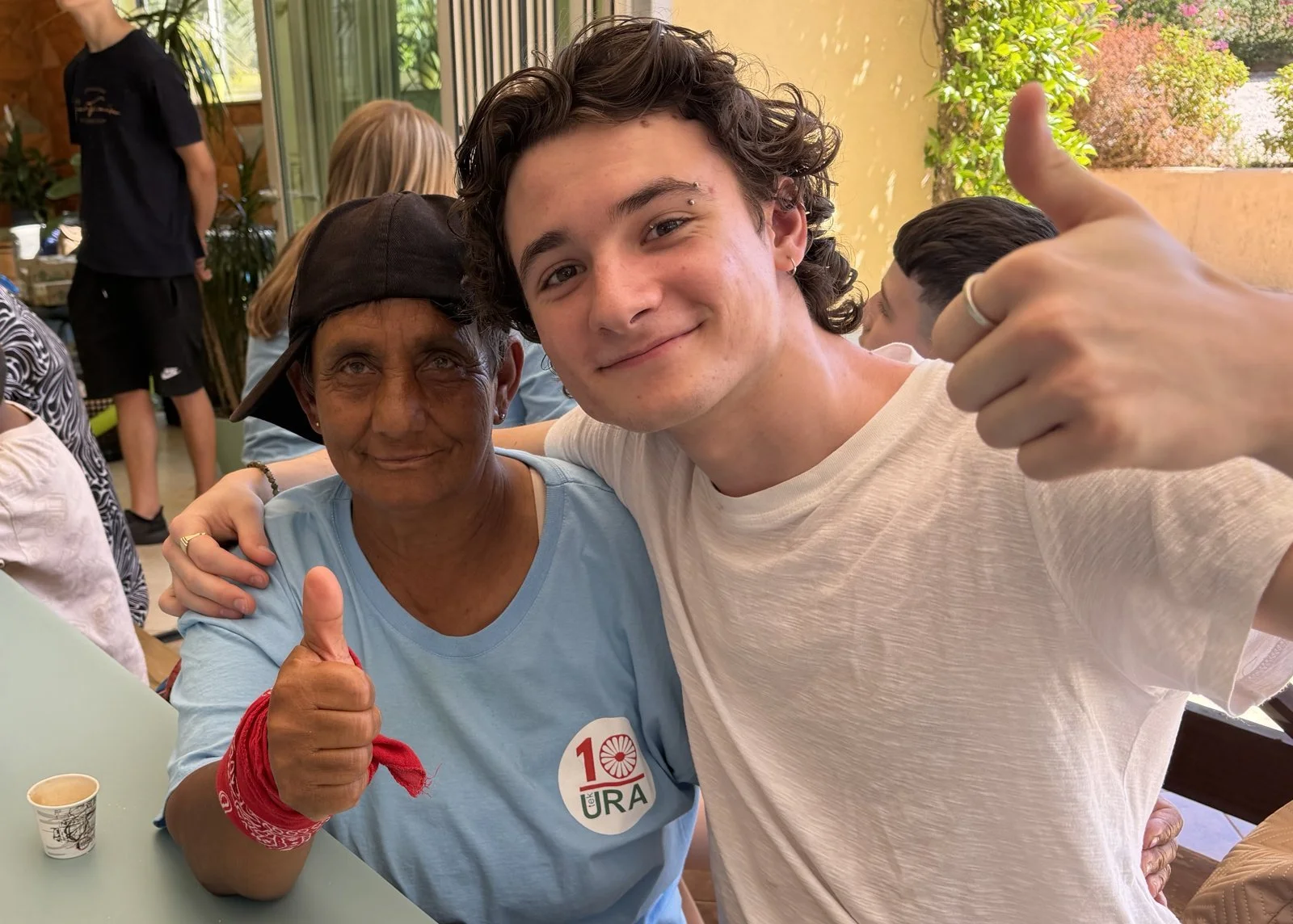
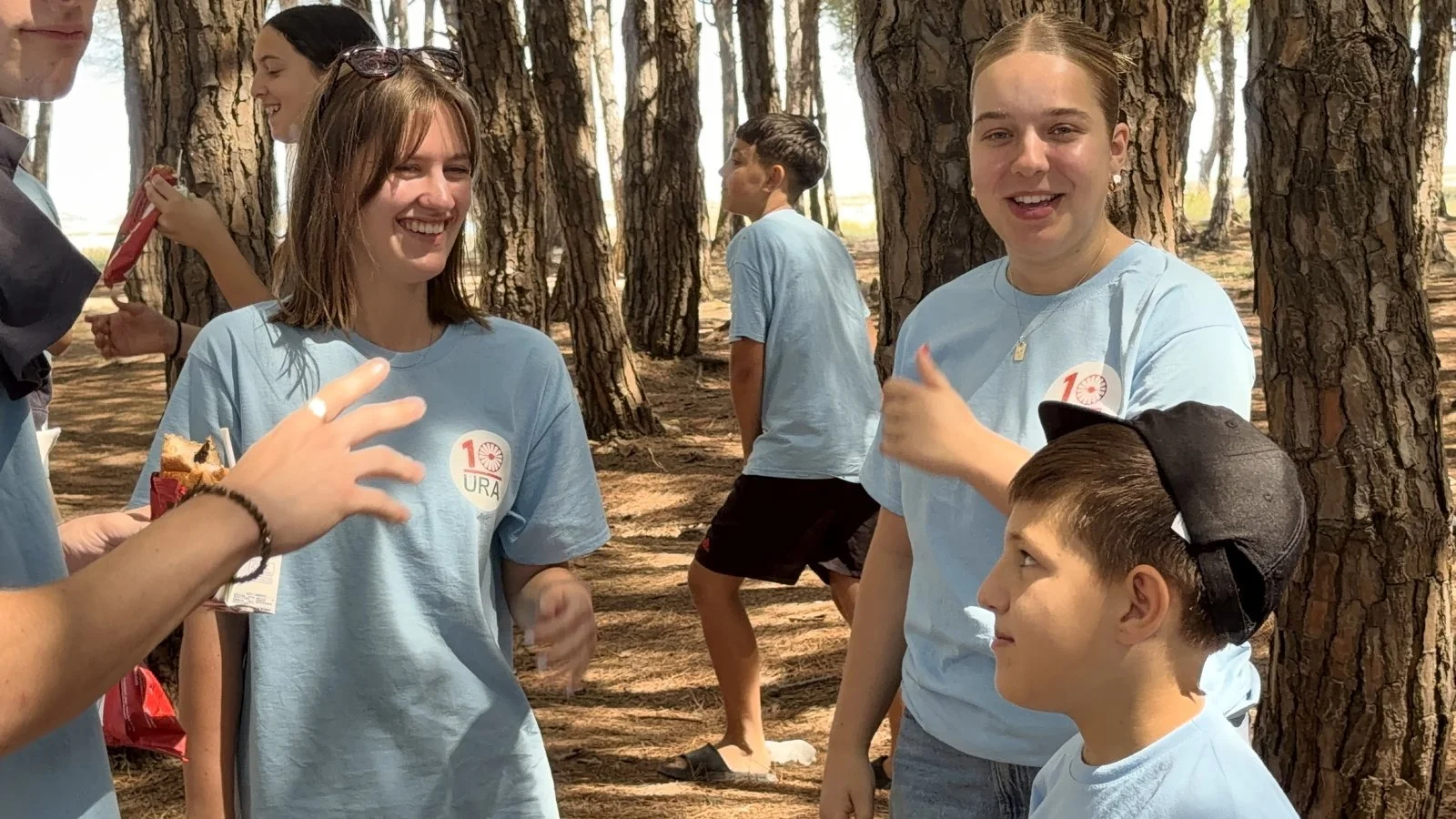
Our own work in Albania is a living case in point. Tek Ura exists to break down barriers, build people up, and bring people together — building bridges between people, with God at the centre — in a European country a couple of hours from the UK. Albania is not, in fact, 'post-Christian' in the way Britain is: it is a historically Muslim-majority country (with Orthodox and Catholic minorities), forcibly atheised for a generation under Hoxha, and today one of Europe's least-evangelised nations. That makes it a genuine gospel frontier, not merely a secular one — a stronger reason to go, not a weaker one. A short-term team there is not sightseeing; it is standing shoulder to shoulder with an Albanian-led church and community that is teaching us at least as much as we bring.
An honest reflection: a country losing its young
Honesty requires a hard word here. The Europe on our doorstep is not simply secular; in places it is emptying of its young. Albania is losing its 15–29-year-olds faster than any country in Europe — around 18,300 in a single year — while its overall population fell by some 28,500 in 2025 and births have dropped by roughly a third in a decade. One EU report found 74% of Albanians under 30 want to leave. We work in a nation whose most gifted young people — its doctors, teachers and builders of the future — are being drawn away, and whose churches feel that loss keenly.
This is where a certain kind of mission does real harm, and we must name it. If we fly in, do the interesting work, take the photographs and leave — or worse, if we recruit the brightest young Albanians into our projects only to see them leave too — we become one more part of the drain, not a remedy for it. The last thing Albania needs is Westerners arriving to replace Albanians.
"Come to empower, not to replace; to invest in a generation, not to import a solution. Belong before believing; empower before departing."
So the message we want our young adults to carry is the opposite one. The whole shape of Tek Ura is bent toward this — Albanian-led, with the stated aim of an Albanian executive, local leaders trained and released, and every programme owned by the community it serves. A UK short-term team's job is to strengthen the hands of Albanians who are staying, to help make it worth a young Albanian's while to build their life and faith at home, and then to get out of the way.
And here is the hopeful part — because Albania is, above all, a place of hope. This is not a story of decline but of a confident, growing, Albanian-led church. At Tek Ura, leadership is overwhelmingly Albanian and strikingly female: Albanian women lead the team, the finances, the rehabilitation and skills programmes, the social work and the church in Durrës. In a region where women have not always been handed the microphone, a new generation of Albanian leaders — many of them young women — is being raised up, trained, and released to shape their own nation's future. That is not a project the UK could ever do for Albania; it is something God is doing through Albanians, which we are simply privileged to serve.
Which is why the role of the missionary and the willing young adult remains genuinely crucial — but as learner first. The Albanian and wider Balkan church has come through decades of official atheism and hardship with a resilience, hospitality and living faith from which the comfortable Western church has much to learn. Young adults who go to Albania to learn from Albanian and Balkan Christians — before they presume to teach — come home changed, and carry that fire into churches here. The traffic of blessing runs both ways. That is the whole point of from everywhere to everywhere.
Answering the objection: should we not prioritise the Global South?
A view is sometimes held among us that British Baptists should now concentrate our people and pounds on the Global South, where the church is growing, and quietly leave Europe to itself. It is well-meant, and it carries real weight, which we should feel before we answer it: our people and pounds are finite, stewardship rightly asks that we invest where the harvest is greatest, and few of us want to pour scarce resources onto ground that looks hard. But it does not finally withstand scrutiny.
First, it misreads the data. The Global South is not short of Christians, workers or momentum; it is the North's share that has collapsed. Directing our limited people toward the world's fastest-growing churches, while the one region in genuine decline sits on our doorstep, is to send water uphill. The greatest spiritual need in reach of a UK church is not in Nairobi or São Paulo; it is in Tirana, Marseille, and Milton Keynes. Second, it patronises the very churches it means to honour: the mature, confident churches of the South are increasingly the senders, not merely the receivers. Third, it forgets the Great Commission is 'all nations.' A polycentric church is not one that picks a favoured continent; it is one where every part sends and every part receives.
"To love the Global South rightly is not to neglect Europe on its behalf. It is to take up our own field so that they need not carry ours."
A generation is stirring
Something is moving among the young — and it shows up across more than one study. The Bible Society's 2025 research, widely dubbed The Quiet Revival, made national headlines with striking figures for youth churchgoing. We should now set those particular numbers aside: in March 2026 the Bible Society formally retracted them, after the underlying survey was found to be methodologically unreliable. So we need not lean the whole case on one headline — because we do not have to.
Independent research from Youth for Christ points the same direction. Its 2025 report on 11–18-year-olds found 67% believe in a higher spiritual force, 52% identify as Christian, and 35% call themselves a follower of Jesus — up 12 points in five years. Two-thirds hold a positive view of their local church, and over half say they would consider coming if a friend invited them. Church attendance in that age group has doubled since 2020. Different researchers, different methods, same signal: this is a spiritually open generation.
Prudence says: do not oversell a revival. But the cautious reading still leaves us with young people markedly more curious about God than the headlines of a decade ago suggested. The door is ajar — and more than half of them are, by their own account, waiting to be asked. The question is whether we will hold it open, and invite them through.
What short-term mission actually does
Short-term mission has its critics, and some of the criticism is fair: two weeks cannot fix systemic poverty, and badly run trips can burden hosts and flatter visitors. We should say so plainly. But the research also shows something the critics often miss. For a striking number of long-term missionaries, mission workers and lifelong disciples, the story began with one short trip. It is one of the most consistent vocational on-ramps we have.
Handled well, a short-term experience tends to do three things in a young adult. It converts belief into obedience: faith stops being theoretical, and many describe their first cross-cultural trip as the moment discipleship became real — and for some, the moment they came to faith at all. It surfaces calling: a fortnight in another culture is often where a sense of vocation is first tested and named. And it reshapes the sending church: returning young adults carry fire back into their home congregation, raising the whole church's missional temperature.
The research is equally clear about the conditions. Short-term mission bears long-term fruit only when it is embedded in genuine, ongoing partnership — led by the host, reciprocal in learning, modest about what it can achieve, and connected to relationships that outlast the trip. That is not a caveat to the argument; it is the argument. Facilitated well, short-term mission honours the Global South rather than slighting it, because it comes to receive as much as to give.
A word to young leaders
If you are young and wondering whether God could really be calling you to go: yes. Not because you have it all figured out, and not because the church back home has run out of people — but because you are part of a family that has always believed the whole church is sent.
You do not need to cross an ocean to start. Some of the most important frontier is a short flight away, in a secular, searching Europe that is longing for hope. Go and stand alongside a local church that is already at work. Come to learn before you come to lead. Let a fortnight test what a lifetime might hold. You may return with your sense of calling clarified, your faith deepened, and — like so many before you — the beginning of a story you will still be telling in forty years.
"The best is yet to come. And some of you reading this are part of what comes next."
What we are asking of the Baptist family
If this reading is right, the UK Baptist family — associations, colleges, and local churches together — can do a handful of concrete things to steward the moment:
- Name the theology out loud — teach that a polycentric church still sends from the North, and that facilitating this honours rather than slights the Global South.
- Make Europe a priority field — champion short, accessible, low-cost placements in secular Europe, within reach of far more young adults than long-haul mission.
- Build partnership rails, not one-off trips — fund host-led, reciprocal mission tied to lasting relationships (the At the Bridge internships and Tek Ura's Albanian-led teams are one ready-made model).
- Invest in the young now — resource churches to offer every young adult a genuine chance to go, be formed, and discern a call.
- Track the fruit — follow up returning young adults with mentoring and pathways into ministry and mission, so a fortnight becomes a lifetime.
- Care for the sender as well as the sent — put the unglamorous rails in place: safeguarding, funding, pre-field formation, and a proper re-entry debrief.
God has not finished with the churches of these islands. The map has changed, the family has grown, and a generation is stirring. Let us expect great things — and send.
"Break down barriers. Build people up. Bring people together."
Daniel Dupree · Tek Ura
