

What Happens When the Church Sets the Table Before It Preaches the Sermon
There is a man in Tirana who came to our community centre for the first time because his daughter needed physiotherapy. She has cerebral palsy, and the waiting list for state services is so long that families often simply give up. We had a clinic. We had a therapist. He had nowhere else to turn.
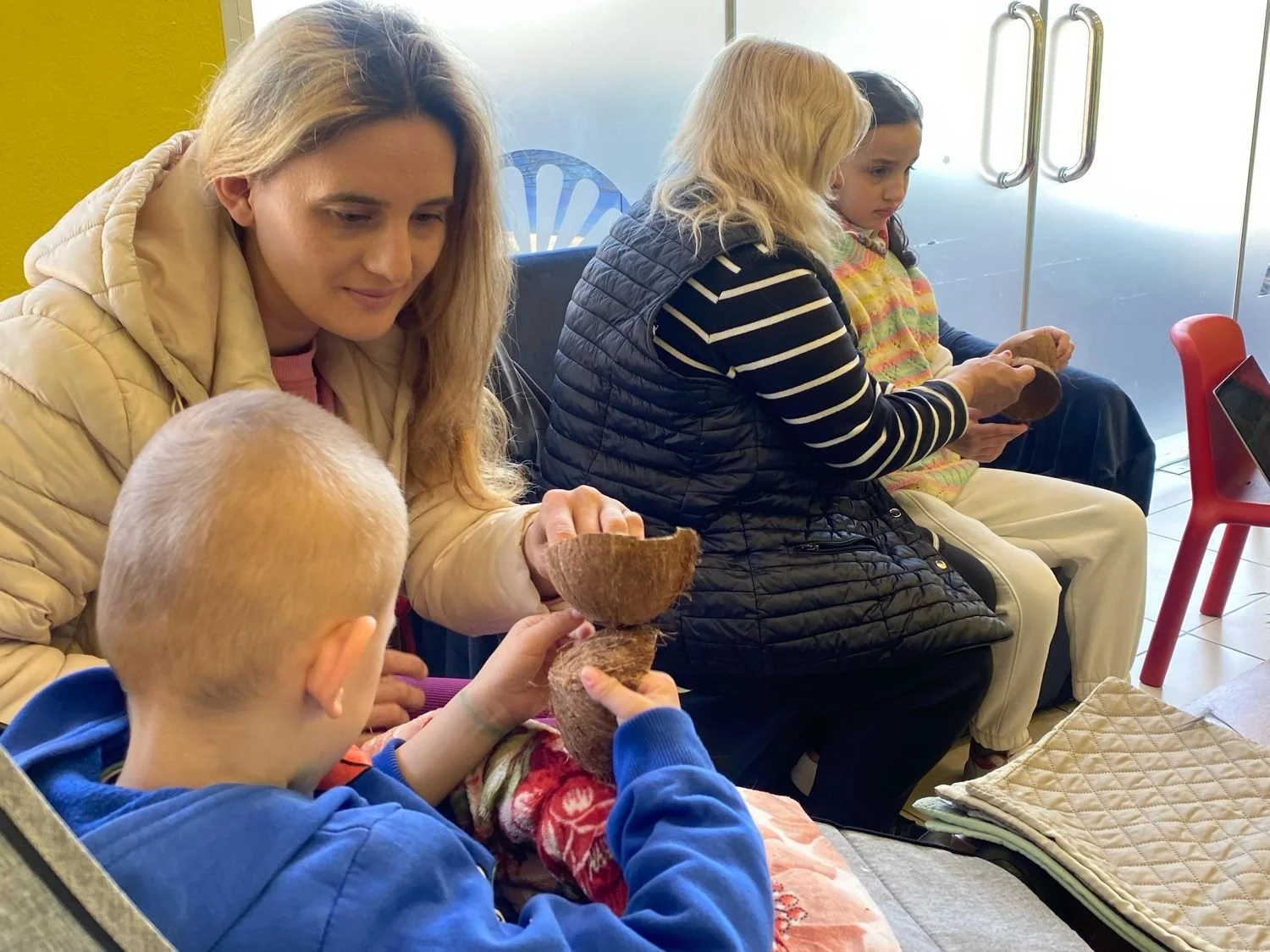
He never expected to end up in a church. He had lived through communism, through the brutal atheism that made faith something dangerous, something shameful. Religion was for the weak, or for the foreign NGOs who used it as a cover. He had seen enough of both.
Four years later, he is one of the most faithful members of Komuniteti i Besimit Tek Ura — the Community of Faith at Tek Ura. He leads prayer. He brings meals to elderly neighbours. He is, in every meaningful sense, a disciple. But he did not become a disciple by hearing a sermon first. He became one by belonging first.
That story is not exceptional. It is, at Tek Ura, the pattern.
Belonging before believing
There is a phrase that has become central to how we describe what we do at Tek Ura, and it is this: belonging before believing. It sounds simple. It is, in practice, one of the most demanding commitments a church community can make.
What it means is this: people are welcomed into the full life of the community — meals, relationships, support, activities, friendship — long before they make any confession of faith. There is no point at which someone must “sign up” to the gospel before they are allowed in. The belonging is unconditional. The believing, if it comes, comes from within the belonging, not before it.
This is not a new idea. It is, in fact, one of the oldest ideas in the church — and one that researchers have been quietly rediscovering for twenty years. A large body of evidence from church planting studies in the United Kingdom, going back to the Church of England’s landmark Mission-Shaped Church report in 2004, has shown consistently that people who are furthest from faith almost never come to faith by first being convinced. They come by first belonging. They join a community, they are loved, they see something real, and eventually they ask who is the God these people follow. The belief emerges from the belonging, not the other way around.
“People almost never come to faith by first being convinced. They come by first belonging.”
What this looks like in practice
Tek Ura is an Albanian NGO and church-planting organisation that my wife Annie and I founded in Tirana in 2016. We now operate across two cities — Tirana and Durrës — with fourteen staff, five programme areas, and a church community of around 150 people gathering weekly in eight cell groups.
Those five programme areas are Church, Skills, Connect, Recovery and Rehabilitation. They are not separate departments. They are interlocking expressions of a single community life, and people move between them naturally over time.
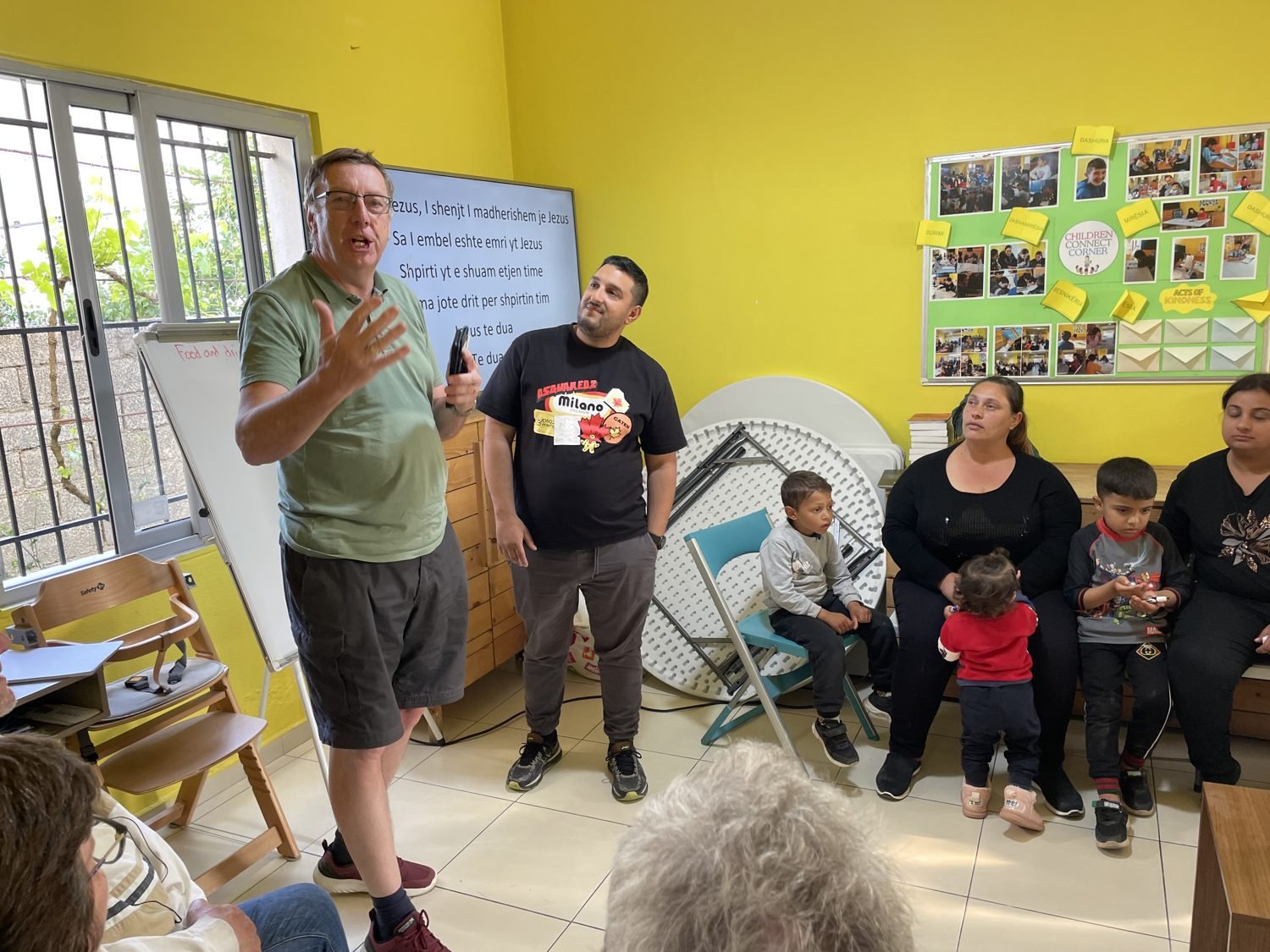
The Skills programme runs homework clubs for 63 children a week, English classes for 57 groups of adults, and Albanian language tuition for 32 refugee families. The Rehabilitation programme operates five-day-a-week physiotherapy clinics and sensory therapy groups, giving away 100 free clinical hours every week. The Recovery programme provides social work, employment pathways, emergency housing repairs and winter heater loans. The Connect programme brings 503 people through our doors each week, trains 65 young Ambassadors aged 8 to 15, and hosts summer camps for over 400. And the Church community — Komuniteti i Besimit — gathers in cells across both cities, shaped by and accountable to the same community relationships.
The man whose daughter needed physiotherapy did not “graduate” from the Rehabilitation programme into the Church programme. He simply lived in the community long enough that the community became his community. The table was set before the sermon was preached. The belonging was real before the belief was articulated.
What the evidence says
I want to tell you about some research that has struck me deeply, because I think it confirms something that many of us have known intuitively but struggled to put into words.
A major study published in 2025, led by researchers at Baylor University and published in the Review of Religious Research, asked 27 families of children with disabilities what their experience of church had been. The findings were sobering. They identified 22 distinct barriers that prevent families like these from belonging to a church community — from leadership attitudes to physical accessibility, from the willingness of other congregation members to the availability of trained support.
But here is the finding that stayed with me. The research identified ten things that had to be true before a family said they genuinely “belonged” in a church: being present, invited, welcomed, known, accepted, cared for, supported, befriended, needed, and loved. Not one or two. All ten. And families who experienced even one persistent failure in these ten areas frequently stopped coming to church altogether.
“The research found ten belonging indicators. All ten had to be present. One failure was often enough for a family to stop coming.”
When I read that list, I thought immediately of Tek Ura. Not because we have perfected any of it — we have not — but because those ten words describe the actual aspiration of what we are trying to build. And I thought of every church I have known where families of disabled children have drifted away quietly, feeling invisible, because the belonging was never quite real.
The same research pattern shows up in education. A 2025 systematic review of what helps refugee children succeed in school found that three things are necessary: safety, belonging and academic support. You cannot replace one with more of another. The belonging is not a nice extra; it is a condition of the learning. And belonging does not happen automatically just because a child is enrolled. It requires sustained, active investment by the people around them.
And in community cohesion. A 2025 longitudinal study tracking young people in Belfast and Bradford found that regular, meaningful contact across lines of difference genuinely does reduce prejudice and build social trust — but only when the contact is sustained over time and embedded in real relationships, not delivered in one-off events or short programmes. You cannot manufacture belonging. You can only create the conditions in which it grows.
What this means for your church
I am aware that writing from Albania about what this means for a Baptist church in Bedford or Brighton or Bristol is a risk. Our contexts are different. The structural legacy of communism is specific. Albania is specific. I do not want to flatten the differences.
But I do want to say this: the principle is not specific.
Every community in the United Kingdom contains people who will not cross the threshold of a church building to hear a sermon. Not because they are opposed to God, but because the gap between their world and the world they imagine inside that building is simply too wide. The person who grew up with no church background. The family navigating a disability diagnosis and feeling invisible. The man who has been to prison. The woman who has been through a divorce and assumes she is not welcome. The teenager who cannot connect the worship songs with anything real in their life.
For many of these people, the question is not “will you come and hear the gospel?” It is “will you let me belong first?”
“The question is not ‘will you come and hear the gospel?’ It is ‘will you let me belong first?’”
The Table project at Vale Community Church, the church Annie and I also co-lead in Marston Moretaine, was built on exactly this conviction. It is a free community meal, open to everyone, no strings attached. In its first eight weeks, 83 unique individuals came through the door. Most of them had never been inside a church building. Some of them are now asking deeper questions. Some of them are not yet, and that is fine. The table was set first.
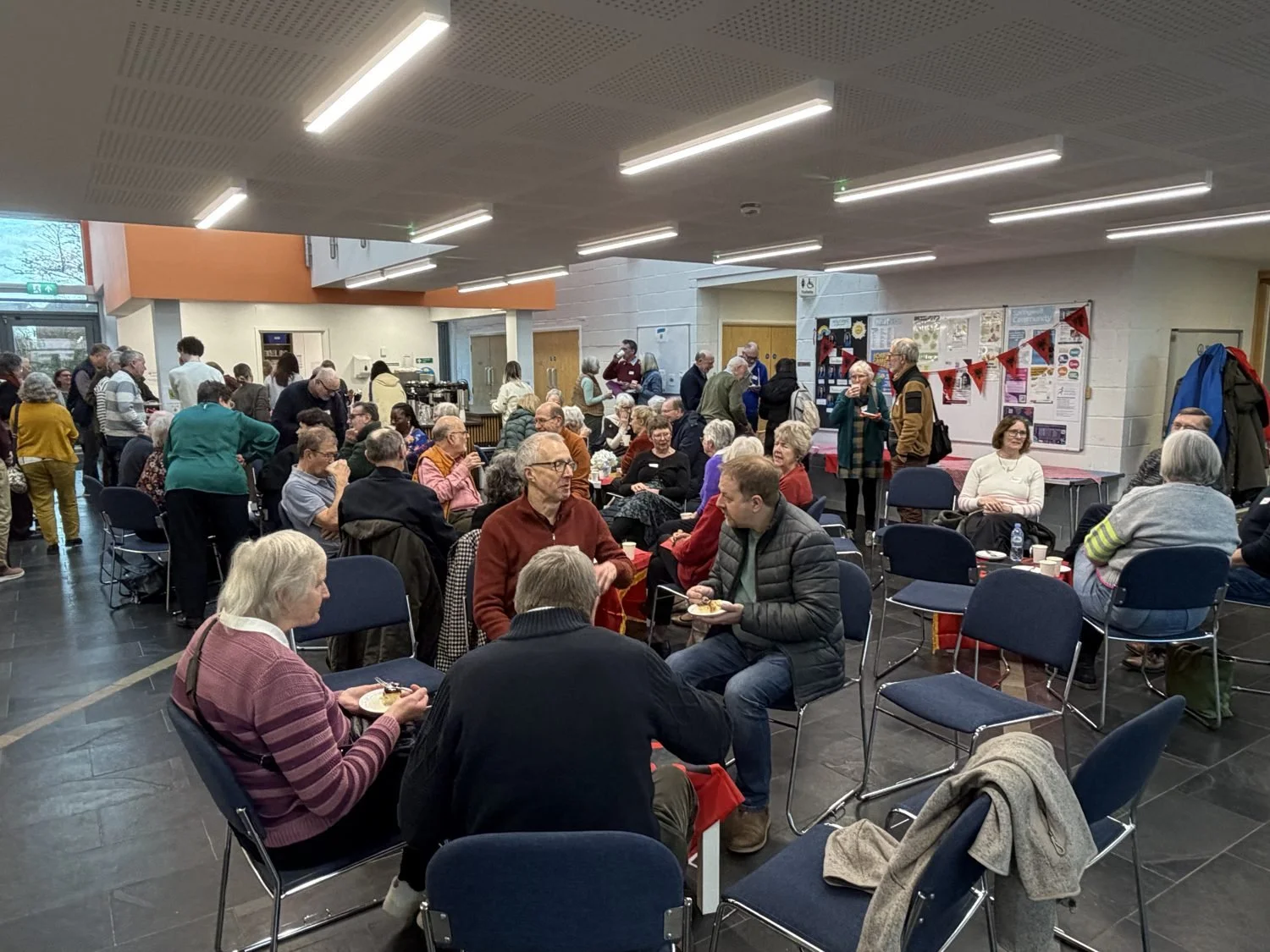
Setting the table first is not a strategy for avoiding the hard work of proclamation. It is the precondition for proclamation having any chance of being heard. The man in Tirana did not have his ears closed to the gospel before he came to Tek Ura. He had his heart closed — by history, by suspicion, by the legitimate grievances of a lifetime. Four years of belonging opened it. And when it opened, he was not pressured or programmed into faith. He came to it.
“I am the bread of life. Whoever comes to me will never go hungry.”
JOHN 6:35That is what I believe the gospel looks like when it is genuinely embodied. Not a message delivered at arm’s length, but a community that makes itself genuinely available to be known and to know, that sets the table before it preaches the sermon, and that trusts the One who said I am the bread of life to do what only he can do.
A question to sit with
I want to leave you with a question rather than a programme. You do not need another programme. What I am describing is less a method than a posture.
The question is this: in your church community, is there a place where someone who does not yet believe can genuinely belong? Not a guest services team that smiles at newcomers and gives them a coffee. Not a welcome rota. But a place — a meal, a community activity, a shared project — where someone from the outside of faith can be known and loved and given something real, before they are asked to believe anything?
If not, it may be worth asking why not. And it may be worth asking what it would take to create one.
The evidence says that when belonging is real, the believing often follows. The missiological literature says the same thing. Ten years of community life in Albania says the same thing.
Set the table. The guests will come.
