

English · Lexojeni këtë faqe në shqip
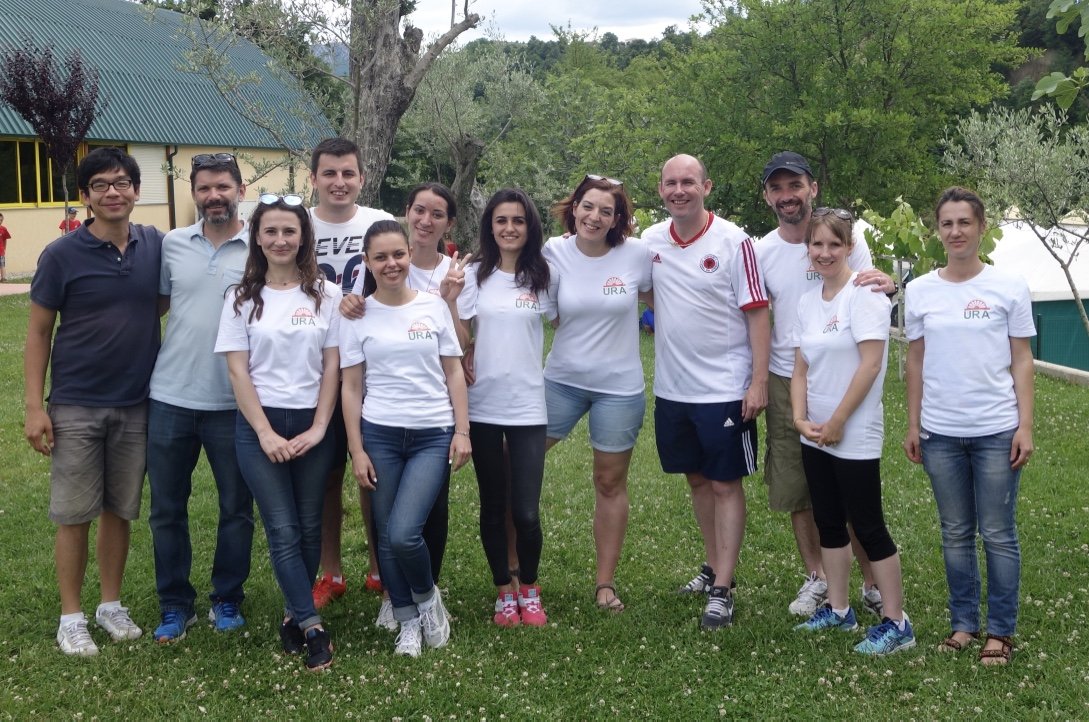
Baptists in Albania · a short history
On the first of May 1999, with the Kosovo war burning across the border, representatives of four small churches met in the Palace of Culture in Tirana and founded the Baptist Union of Albania. Their first act as a union was not about buildings, constitutions or membership. It was a resolution on the care of refugees.
This page tells the story of how Albania came to have Baptist churches at all, what Baptist mission in Albania looks like now, and who is carrying that work today. It is written for UK Baptist churches weighing a partnership, for students and researchers, and for anyone trying to establish who is actually doing Christian mission in Albania. It is a story worth telling properly, because Albanian evangelicals have been contributing to their nation's flourishing since before Albania was a state — and because most of what is written about them online is either decades out of date, or written by people who have never been there.
It is worth saying at the outset how small this all is. The European Baptist Federation lists the Baptist Union of Albania at ten member churches and around 250 members in all — an average of twenty-five people per congregation. Read the rest of this page with that in mind.

"Tek Ura isn't about outsiders leading forever. It's about local leaders — young people shaping their own future."
— Matilda Dule, Team LeaderWhy this page exists. We work in Tirana and Durrës every day, and we are asked these questions often — by churches considering partnership, by students, by people tracing family or mission history. We are not a neutral party: Tek Ura is one of the organisations described near the end of this page. Everything before that section is history that belongs to no one, and we have tried to write it that way.
The story so far
A timeline
- 1816 — the first push for an Albanian BibleRobert Pinkerton of the British and Foreign Bible Society argues for translating Scripture into Albanian. At this point there is no Albanian Protestant church of any kind.
- 1827 — the first Albanian New TestamentVangjel Meksi's translation, completed in 1821, is published. This is where the whole story begins: the conviction that Albanians should hear the gospel in Albanian.
- 1860s–80s — Kostandin KristoforidhiThe Bible Society's great translator renders Scripture into both Albanian dialects. His religious identity is debated by historians; what is beyond dispute is that his translations shaped written Albanian itself.
- 1883–1894 — Gjerasim Qiriazi, "the first preacher of Albania"A native of Manastir — today Bitola, in North Macedonia — Qiriazi joins the Bible Society in 1883. His kidnapping by brigands in 1884, and his composure through six months of captivity, makes him a national figure. From around 1890 he leads the evangelical mission in Korçë. He dies of tuberculosis in 1894, aged 35.
- October 1891 — the first Albanian-language school for girlsGjerasim and his sister Sevasti Qiriazi open it in Korçë. This is the event Albanian evangelicals are most honoured for in national memory, and the Qiriazi sisters remain national figures. Faith and Albanian flourishing, travelling together from the start.
- 14 November 1892 — the Evangelical BrotherhoodFounded by Qiriazi and companions including Petro Nini Luarasi, with a three-fold aim: spread the gospel in Albania, publish Albanian literature, open Albanian schools. VUSH, today's national evangelical body, dates itself from this day.
- 12 February 1905 — a priest killed for the mother tonguePapa Kristo Negovani, an Orthodox priest who celebrates the liturgy in Albanian and publishes Albanian religious texts, is murdered along with his brother and three others. The conviction that Albanians should worship in their own language was never only an evangelical one, and it was never cost-free.
- 14–22 November 1908 — the Congress of ManastirDelegates meet to standardise the Albanian alphabet still in use today, celebrated every 22 November as Alphabet Day. Among them are Gjergj Qiriazi — Gjerasim's brother, who took over the Korçë girls' school after his brother's death — and their sister Parashqevi Qiriazi, the only woman delegate, honoured by UNESCO as a "morning star" of women's emancipation. The eleven-member alphabet commission was balanced by confession — three Catholic, two Orthodox, four Muslim and Bektashi, and two Protestant, Gjergj Qiriazi and Grigor Cilka. Two seats out of eleven, for a community numbering in the hundreds. Evangelicals were in the room when Albania settled its alphabet.
- 1932 — Baptist work beginsBaptist work in Albania is traditionally dated to 1932, in Korçë in the south-east, on the European Baptist Federation's account. No founder is named in the surviving records. It is small, and it does not have long.
- 1944–1990 — the atheist stateAlbania comes under communist rule under Enver Hoxha. In 1967 Hoxha declares it the world's first atheist state and closes every place of worship — more than 2,000 churches, mosques and monasteries — with the ban written into the constitution in 1976. Clergy are imprisoned and executed, and owning a Bible is a criminal offence. By the end, fewer than twenty evangelical believers are thought to have survived in the whole country. There is no unbroken institutional line. But there is a human one: leadership of the Evangelical Brotherhood had passed from Qiriazi to Grigor Cilka, and then to Koçi Treska, who lived until 1991 — one man's lifetime reaching from the national awakening to the year the doors reopened. What exists today was rebuilt from almost nothing, within living memory.
- 1990–91 — the doors openReligious practice is decriminalised in 1990, with the first public services held that winter. In 1991 the Albanian Encouragement Project, a consortium of mission agencies, gains entry, and a decade of church planting follows.
- 1991 — a question before a planAt the European Baptist Federation's request, the retired Canadian Baptist missionary John Keith and his wife Virginia arrive to survey whether there should be Baptist work in Albania at all. Eight years later he is a guest at the union's founding.
- 1 May 1999 — the Baptist Union of AlbaniaFounded at the Palace of Culture in Tirana, in the middle of the Kosovo war, by four congregations — Freedom Baptist Church and Way of Hope Baptist Church in Tirana, the Baptist church at Bregu i Lumit, and Good News Baptist Church in Lezhë. Its first-ever resolution addresses the refugee crisis. Adnan Pula is elected president and Bekim Beka general secretary, with Ardian Mazreku, Fation Prenga and Flutura Joca on the executive committee. Among the international guests were British Baptists. (Published accounts sometimes give 2003 or 2004. Both dates refer to legal registration, not founding: Albania had no law governing associations in 1999, so the union could not be registered at the time, and it was recognised as an association by court decision on 14 January 2004. The union itself dates its founding to 1 May 1999.)
- How small is small?The European Baptist Federation's member directory lists the Baptist Union of Albania at ten member churches and around 250 members — an average of twenty-five people per congregation. The entire national Baptist body of a country of 2.4 million people is smaller than a single mid-sized British Baptist congregation. Everything on this page is being carried by a community of that size. For scale: Komuniteti i Besimit Tek Ura alone now gathers more than 130 people for worship each week, across ten cells in Tirana and Durrës.
- 22 November 2010 — state recognitionVUSH is recognised as Albania's fifth official religious community, alongside the Muslim, Orthodox, Catholic and Bektashi communities.
- 2016 — Tek Ura commissionedPastors representing all of the churches of the Albanian Baptist Union commission Qendra Tek Ura in Tirana — a new community work founded by British Baptist ministers Dan and Annie Dupree, set apart by Albanian hands.
- 2 October 2019 — an Albanian pastor at the bridgeJuri Arapi is inducted as the first Albanian Baptist pastor of Komuniteti i Besimit Tek Ura. Three years from commissioning to Albanian pastoral leadership: the transition was not a response to anyone's departure. Asked whether he will submit himself as God's servant and as a minister in God's Church, he answers: "I do, for God has called me." It was the plan. He remains its pastor today.
- 26 November 2019 — the earthquakeA magnitude 6.4 quake kills 51 people, twenty-five of them in Durrës, and destroys some 11,000 buildings. VUSH has people on the ground the following morning and runs relief centres in Durrës, Shijak, Vorë, Thumanë and Laç.
- 1994 and 2022 — the Albanian BibleThe Albanian Bible Society completes the first full Albanian Bible of the new era in 1994. In 2022 the Interconfessional Bible Society publishes Së bashku — “Together” — translated from Hebrew and Greek as the joint work of Albania's Catholic, Orthodox and evangelical Christians. The argument Robert Pinkerton made in 1816 is settled, and settled together.
- TodayVUSH is the umbrella body for some 160–200 congregations across Baptist, Brethren, Pentecostal and non-denominational traditions, in a country of about 2.4 million. Evangelicals remain well under one per cent of the population — the 2023 census records 0.40%, though around a third of the country declined to name a religious community at all — and carry a public role out of all proportion to their number.
What that cost was not abstract
In 1970 a mother asked a Catholic priest, Shtjefën Kurti, to baptise her child. He did it in secret. He was executed by firing squad on 20 October 1971, and beatified in 2016 as one of Albania's thirty-eight martyrs of the communist era. Baptism — the practice British Baptists take their name from — was, within living memory, a capital offence in this country. It is worth holding that in mind when reading about the baptisms happening in Albanian churches today.
This is where the Baptist tradition has something particular at stake. Baptists baptise on personal confession rather than at birth, and govern their congregations locally rather than from above. Their oldest and most costly conviction is that faith cannot be compelled: that no state has authority over a person's conscience, and that a church which needs the government's permission to exist is not free. Albania is the country where the opposite case was carried through to its conclusion. That is why a union of ten small churches, and the ordinary freedom to gather at all, is worth more than the numbers suggest.
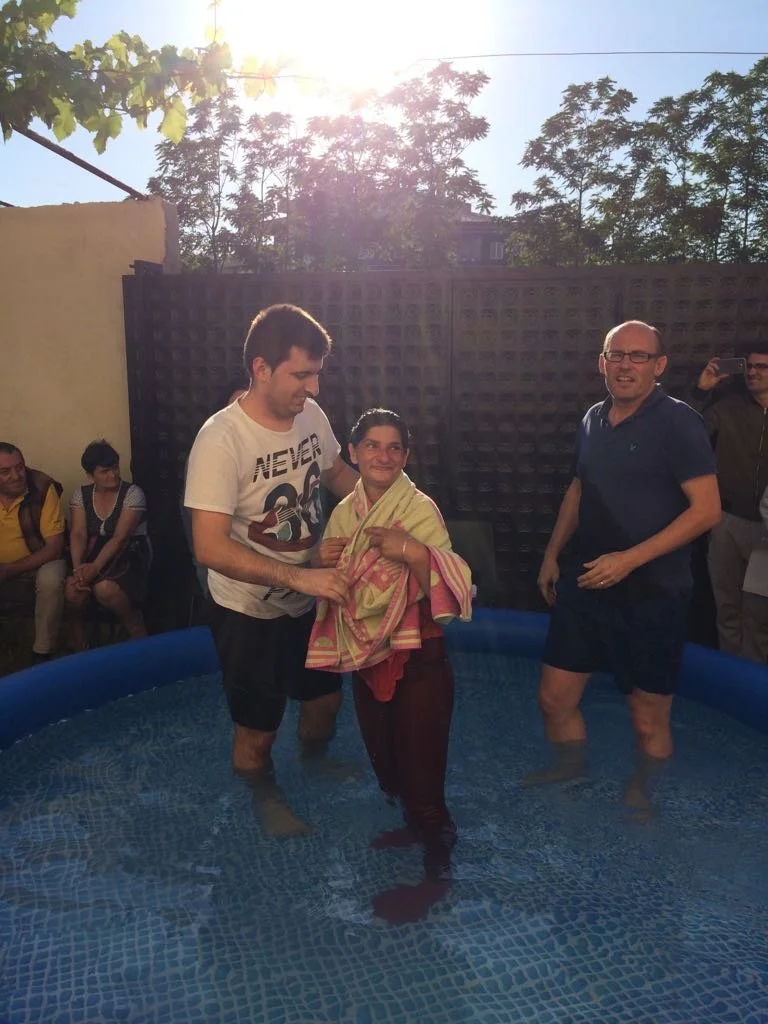
"As a teenager in the 1970s I heard Enver Hoxha declare that he presided over the first atheist state — and I wondered what God thought of that. Today is part of the answer. God has been at work all the time."
— Paul Martin, Tonbridge Baptist Church
On the ground
Baptist mission in Albania: what is actually happening now
Albanian evangelical churches have generally grown through community work rather than through preaching alone. Homework clubs, English classes, disability and rehabilitation services, pathways from poverty into education and employment, work alongside Roma and Egyptian communities, refugee support, anti-trafficking work, summer camps. In a country where the church had to re-earn its place in public life from zero, credibility has been built by service — communities doing remarkable things with very little, in the same tradition as the evangelicals who opened Albania's first girls' school.
“People were belonging before believing. Immediately Tek Ura became my second family.”
— Matilda Dule, Team LeaderThree things follow from this that outside observers regularly get wrong.
The work is now overwhelmingly Albanian-led
The era of expatriate missionaries directing Albanian congregations has largely passed — which is not at all the same as saying the sending has stopped, or should. Where international partnership continues, it looks like funding, training, friendship and mutual learning rather than direction: mission from everywhere to everywhere, with visitors coming to learn before they presume to teach. The Albanian church, having come through a generation of enforced atheism with its faith intact, has at least as much to give the visiting church as to receive from it.
The need for people to come has not gone away — it has changed
Albania's 15–29 population fell by 4.3% in the single year to January 2025 — the steepest such fall anywhere in Europe — and its churches feel that loss as sharply as anyone: congregations across the nation train leaders, worship musicians and youth workers, and then watch them board flights to Germany, Italy and Britain. A church can be Albanian-led and still be short of people. That is the context in which Tek Ura and At the Bridge remain open to receiving people sent from the UK — not to replace Albanians, but to stand alongside a church losing its own, to strengthen the hands of those who are staying, and to help make it worth a young Albanian's while to build a life and a faith at home. Come to empower, not to replace. At the Bridge's Immersive programme exists for exactly that: short-term teams alongside six- and twelve-month internships, hosted by an Albanian-led team, with visitors expected to arrive as learners first.
The map of international involvement has changed since 2020
Several long-standing Western mission agencies have reduced or ended their Albanian programmes, and published descriptions of "who works in Albania" are frequently years out of date.
Tek Ura's own history is a clear example. The work was founded in 2016 by Dan and Annie Dupree, then serving as mission workers with BMS World Mission, and grew alongside the Albanian Baptist Union. That agency partnership, and the funding attached to it, concluded at the end of December 2023. Since then the work has been sustained by its Albanian team, its own fundraising, and British Baptist churches giving directly rather than through an agency.
This is worth stating plainly, because the transition is often misread as the end of British Baptist involvement in Albania. It was not. What changed was the structure — from agency-directed mission to direct church-to-church partnership, with the day-to-day work in Albanian hands.
There is one more thread worth naming. The Albanian Baptist Union's first corporate act, in May 1999, was a resolution on refugee care. In its most recent reported year, Tek Ura supported 32 refugee families through Albanian language teaching and worked against trafficking in two cities. The concern is not imported; it has been Albanian Baptist DNA from the first day.
“… prays that the God of Peace, who in Jesus Christ has shared the human suffering up to the experience of death, that in His mercy He may comfort and meet the basic needs of all the victims of this war, whatever their ethnic origins.”
— Baptist Union of Albania, first resolution, 1 May 1999Who is there
Baptist churches and mission organisations in Albania today
A non-exhaustive list. If your organisation should be here, or the details are wrong, please tell us: info@tekura.org
Baptist Union of Albania
The national Baptist body, founded 1 May 1999 in Tirana, member of the European Baptist Federation, which lists it at ten member churches and around 250 members.
Evangelical Brotherhood (VUSH)
The national umbrella body for evangelical churches, dating from 1892 and recognised as Albania's fifth official religious community in 2010.
Qendra Tek Ura
Community centres, church and five programmes in Tirana and Durrës — see below.
Baptist roots, Albanian leadership
Tek Ura
Qendra Tek Ura — "at the bridge" — was founded by Daniel (Dan) and Anastasia (Annie) Dupree and registered as an Albanian charity in 2016. It was not self-appointed: on 10 March 2016 the pastors of the Albanian Baptist Union came to the Tek Ura centre in Kafja e Rremes and set the work apart, with British Baptists among those gathered — Rev Andrew Jones of Avenue Baptist Church, London, who now serves as a Tek Ura trustee, and Mary McLachlan of Forest Row Baptist Church — alongside other UK and Albanian Christians.
The churches that sent Tek Ura were the congregations of the union itself: Kisha Liria in Tirana, Kisha Lajmi i Mirë in Lezhë, Drita e Botës in Shkozë, Kisha Ungjillore Baptiste in Bathorë, Kisha Udhë Shpëtimit in Laprakë, Living Water Church in Fushë-Krujë, and Kisha Baptiste in Vlorë. Two of them had founded the union itself seventeen years earlier: Kisha Liria is the Freedom Baptist Church of that first assembly, and Kisha Lajmi i Mirë the Good News Baptist Church of Lezhë.
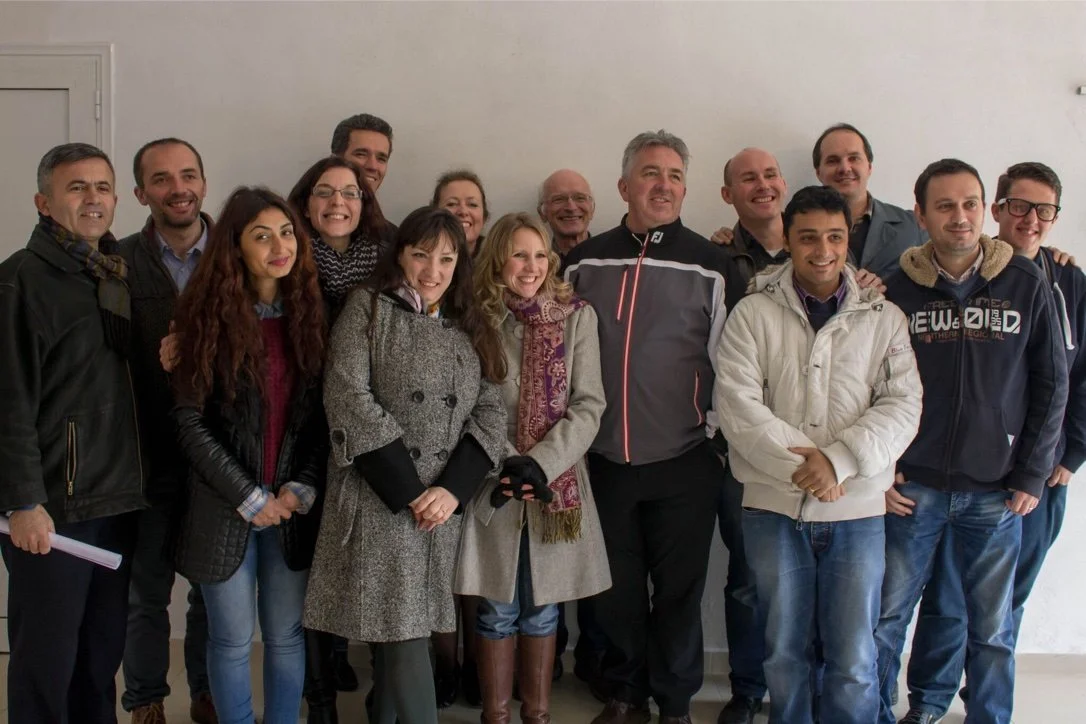
Albanian leadership was built into the foundations, not added later. Mondi Palucaj, President of the Albanian Baptist Union, was not only presiding that day: he was commissioned alongside the Duprees and the Gregorys, one of those being sent rather than only one of those sending. He became Tek Ura's inaugural president (2016–2018), serving as a first trustee with British mission workers Suzanne Gregory (2016–2018) and Mat Gregory (2016–2020) — with the Duprees the continuing presence from that first board to today. From day one the charity's presidency was Albanian, held by the national union's own leader.
In 1999, British Baptists were in the room when Albanian Baptists organised their union. In 2016, Albanian Baptist pastors were leading the room when a British Baptist work was commissioned among them. The blessing has flowed in both directions from the start.
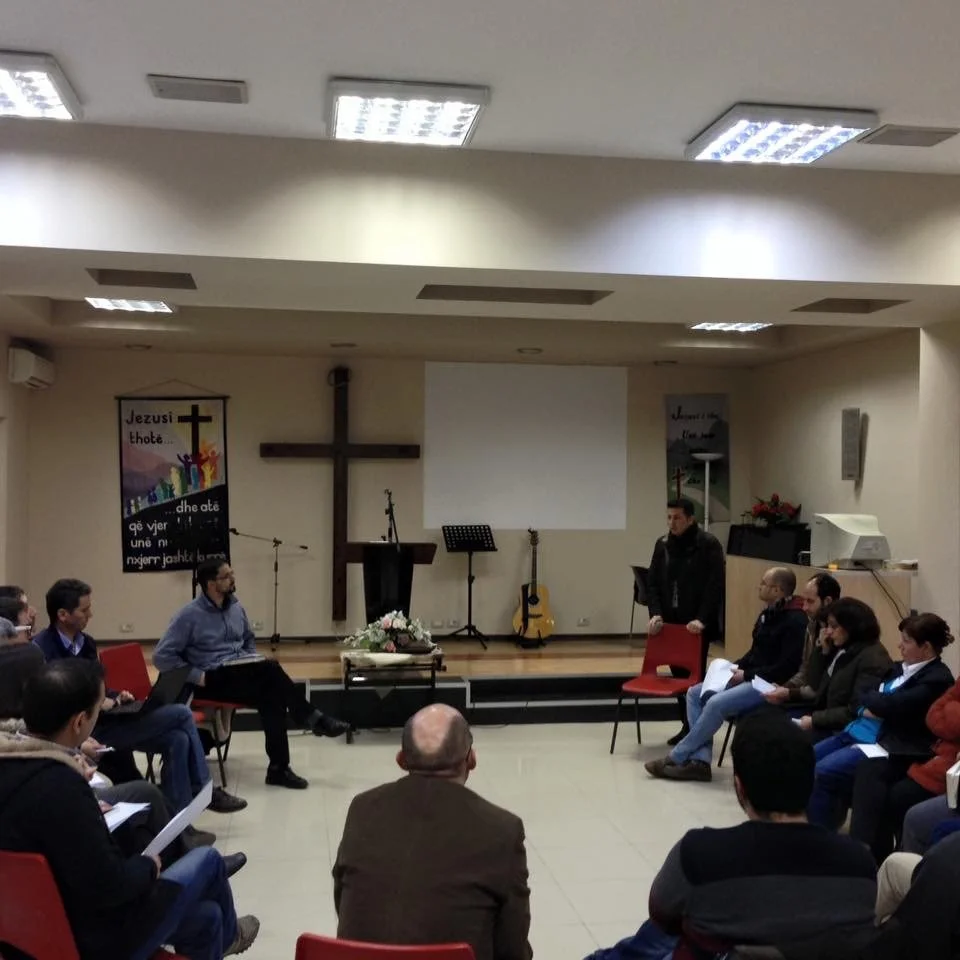
Tek Ura runs community centres in Tirana and Durrës. The Baptist connection is direct and current rather than historical. The work is steered by Dan Dupree, an accredited minister of the Baptist Union of Great Britain, alongside Annie Dupree, who is training for ministerial accreditation with the Central Baptist Association. Both are Baptist pioneers within the CBA, which supports the Duprees' hybrid role across Vale Community Church in Bedfordshire and Tek Ura in Albania — a life lived between two countries. The work in Albania is held alongside Baptist ministry in the UK rather than separately from it: the same people, the same week, two countries.
More than thirty Baptist churches across Britain currently support the work, through Tek Ura's Council of Supporters, which stretches from the south coast to Scotland. Its UK sister charity, At the Bridge — launched in 2024 and registered with the Charity Commission on 2 July 2026 (charity number 1218711) — exists for the relief of poverty among Albanian people, making grants to the work in Albania and offering material assistance to people affected by trafficking between Albania and the UK.
This is a line that runs back a long way — through the union's founding in 1999, the Korçë Baptists of 1932, the alphabet congress of 1908, and a girls' classroom opened by evangelicals in 1891.

Albanian-led — not as aspiration but as payroll
The church community, Komuniteti i Besimit Tek Ura ("the Faith Community at the Bridge"), has had Albanian pastoral leadership since 2 October 2019, when Juri Arapi was inducted as its first Albanian Baptist pastor — four years before any agency transition. Juri remains its pastor today, across both cities, where more than 130 people now gather for worship each week in ten cells. The team is led by Matilda Dule; the Durrës church cell by Ilsa Basha and Matilda Dule alongside Juri; the rehabilitation clinics by Rexhina Uzuni; Recovery by Roxhers Lufta; and Skills by Eralda Kodheli in Tirana and Ilsa Basha and Flavja Shqefani in Durrës.
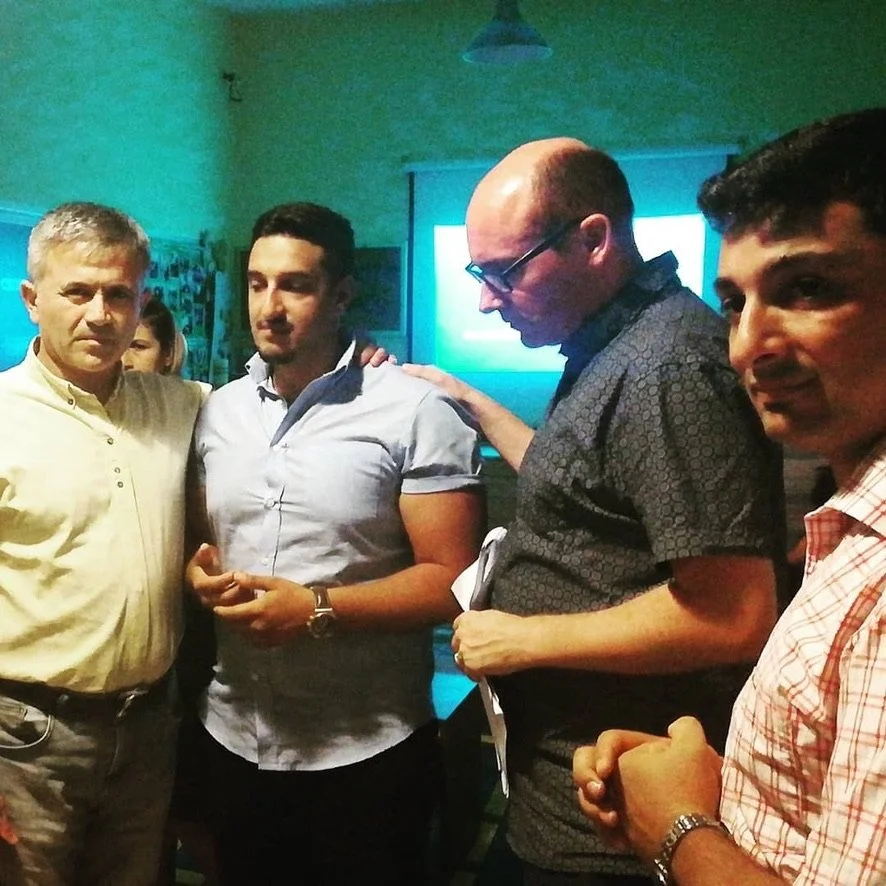
That leadership is also strikingly female, and it is not new: a woman, Flutura Joca, sat on the Albanian Baptist Union's executive committee on the day it was founded in 1999. Albanian women lead the team, the finances, the rehabilitation and skills programmes, the social work and the church in Durrës. In a region where women have not always been handed the microphone, a generation of Albanian leaders — many of them young women — is being trained and released to shape their own nation's future. In a country losing its young people faster than any in Europe, giving its rising leaders reasons and resources to stay, thrive and lead is not a side-effect of the work. It is the work.
"In everything we do, our focus is the Word of God and shared life — because we believe the Gospel is not lived out only through words, but also through presence and love."
— Juri Arapi, Pastor, Komuniteti i Besimit Tek UraThe next generation
After ten years, children who grew up at Tek Ura have been discipled and baptised along the way, and people from the community have gone on to train at ISTL, the International School of Theology and Leadership in Tirana.
One of them is eighteen. His father disappeared when he was small — most likely, as happens in Albania, during an attempt to reach another country. He grew up working to support his mother and sister. He wanted to be a doctor; circumstances quietly closed that off. Then he came to Juri to ask about the Bible school in Tirana. "For me," Juri says, "this was a clear sign that God is preparing a new generation for our church. He may not become a doctor, but I am confident that he will become a fisher of people."
Hold that against the emigration figures. A boy who lost his father to the road out is choosing to train for ministry at home. A work commissioned by Albanian Baptist pastors in 2016 is now raising Albanian pastors of its own. That is what succession looks like when it is the plan.
What it looks like on a Tuesday
Rehab
A physiotherapist giving one of more than a hundred free clinical hours that week.
Recovery
A teenager at a careers group plotting a route into legal employment — one of 34 people who moved into work in the last reported year.
Skills
A refugee mum learning Albanian so her children's school makes sense; some of the 120 children who come each week.
Church
One of ten cells meeting across the two cities — more than 130 people worshipping each week.
Refugee support and anti-trafficking work run across all five programmes. In the year covered by the 2025–26 Impact Report this added up to more than 26,763 hours of community work and over 19,673 recorded attendances, with some 537 people reached weekly across the two cities.
Tek Ura turned ten in 2026. The anniversary gathering — Tek Ura 10 — drew over 100 supporters from some thirty Baptist churches, with most of the Albanian team present.
Where this goes next
Come and see
If you're a church wondering what partnership with Albania looks like now, start a conversation: info@tekura.org. If you pray, the team publishes prayer news monthly — ask to join the list. And if you know a part of this history we've missed — especially from the Albanian side — we would genuinely love to correct and extend this page.
Sources
- Baptist Press, "Baptist Union of Albania organizes; first resolution addresses refugees," 21 May 1999
- Word&Way, "Small But Mighty: Albanian Baptists Defy the Odds" (2019)
- European Baptist Federation, "Albania – Growing Christian Faith"
- VUSH (Vëllazëria Ungjillore e Shqipërisë) — on the 1892 founding and 2010 state recognition
- UNESCO, on Parashqevi Qiriazi and the Congress of Manastir
- Albania Census 2023 (INSTAT) — evangelical affiliation 0.40%; population 2,402,113
- Beatification of the 38 Martyrs of Albania, Shkodër, 5 November 2016
- Baptist Press, “Young Baptist ministry in Albania key aid channel to Kosovar refugees,” 27 May 1999
- European Baptist Federation member directory, Central & Southern Europe
- Institute for Albanian and Protestant Studies, on the Evangelical Brotherhood after Qiriazi
- Konstantinos Giakoumis, “The Policy of the Orthodox Patriarchate Toward the Use of Albanian in Church Services,” Albanohellenica 4 (2011)
- Albanian Bible Society; Interconfessional Bible Society of Albania (Së bashku, 2022)
- Eurostat, 15–29 population change to January 2025
- Tek Ura Impact Report 2025–26
- John Quanrud, A Sacred Task: Qiriazi and the Albanian National Awakening
Last reviewed: 28 July 2026.