

Homework by Lamplight
How education is becoming a way out of poverty for the children of Tirana and Durrës — and why your partnership matters more than you know.
Skills & Education · By Daniel Dupree, Ilsa Basha and Eralda Kodheli
English · Lexoje këtë histori në shqip

There is a child who comes to our homework club in Tirana three evenings a week. For a long time, school was a place of quiet humiliation for her. The teacher wrote on the board; everyone else seemed to understand; she didn't. At home there was no one who could help — no adult in the house had ever been given the chance to learn to read. Often there wasn't even electricity to work by. So, in her own words, “sometimes I just stopped trying.”
Then someone told her about Homework Club at Tek Ura.
“Eralda and Ilsa helped me step by step. They didn't laugh when I got things wrong. Now when I finish my homework, I feel proud. And sometimes I'm even the one helping someone else.”
— A girl at the Tirana homework clubI want to tell you what stands behind that little testimony — because when a child in one of the most overlooked neighbourhoods in Albania becomes the child who helps other children with their homework, something has happened that the education statistics say shouldn't be possible. And you, praying and giving from the UK, are part of why it happened.
The country behind the headlines
First, let me clear something out of the way. If your picture of Albania has been shaped by British headlines in recent years — small boats, deportation flights, all of it — I'd gently ask you to set that picture down. The Albania I've lived in since 2014 is a fast-growing country on the road to EU membership, full of young, entrepreneurial, warm-hearted people, with a diaspora doing brilliantly in business, medicine and academia across Europe. Albanians are not a problem to be managed. They are a people to be loved — and, in my experience, a people who love back generously.
But within that country there is a concentrated crisis, and it has a history worth telling honestly. Under communism, Albania achieved something genuinely remarkable — and something genuinely brutal, at the very same time. A country that was mostly illiterate in 1945 reached near-universal literacy within a generation, through campaigns that ran alongside the closing of every church and mosque, forced labour camps, and one of the most closed, watched societies in twentieth-century Europe. Both things are true, and neither cancels the other out. Then came 1991, and the near-total collapse of the economy and the rule of law — a collapse that deepened into open civil unrest in 1997, when the state's authority broke down almost entirely across the country. Hundreds of thousands of families migrated from the villages into makeshift settlements around Tirana and Durrës. The schools were never rebuilt to reach them.
Two communities were hit hardest — the Roma, and Albania's Balkan Egyptian community: distinct peoples, often wrongly lumped together, who under communism had held state-assigned jobs and school places (often at the real cost of pressure to assimilate and set aside their own language and identity) and were pushed out of the formal economy altogether once that system collapsed. When a community is shut out of work for a generation, the street becomes the only economy left.
The results today are sobering, and I want to be honest about where these figures come from. The World Bank estimates — drawing on the 2022 international PISA assessment, whose Albanian results need some caution given low pupil engagement with the test that year — that around half of Albanian fifteen-year-olds are functionally illiterate. Separately, and on firmer ground, EU and UN agencies calculate that around a quarter of young Albanians are not in education, employment or training, more than double the EU average. Local child protection agencies in Tirana recorded 240 cases of children begging or working on the streets in 2024 alone.
And for children with disabilities, there is a law promising them a place in mainstream school — a good law, and in a handful of better-resourced schools it is beginning to work as intended. But in most of the schools our families use, the specific support that would make that promise real is still missing: no assistant teacher in the classroom, no speech or physiotherapist to call on, no individual learning plan tailored to the child. In many families we know, a mother cannot leave the house at all, because her child's complex needs must be met by someone, and there is no one else.
“Exclusion produces children out of school; children out of school produce the next generation of exclusion. Somewhere, the cycle has to break.”
— something we say often, on the hard days, at Tek UraWhere the cycle breaks
Here is what ten years in Tirana and Durrës have shown us, and it happens to match what development economists have found more broadly too: the single most powerful intervention against inherited poverty is a child kept in school and learning. Every year of education raises lifetime earnings. And the effect carries forward a generation, because a mother who can read is simply far better placed to support her own children's learning than one who never had the chance to learn herself. Education doesn't just change one life; it changes every life that follows it.
But the children with the most to gain are the ones the system loses first. And that is exactly where Tek Ura has spent ten years.
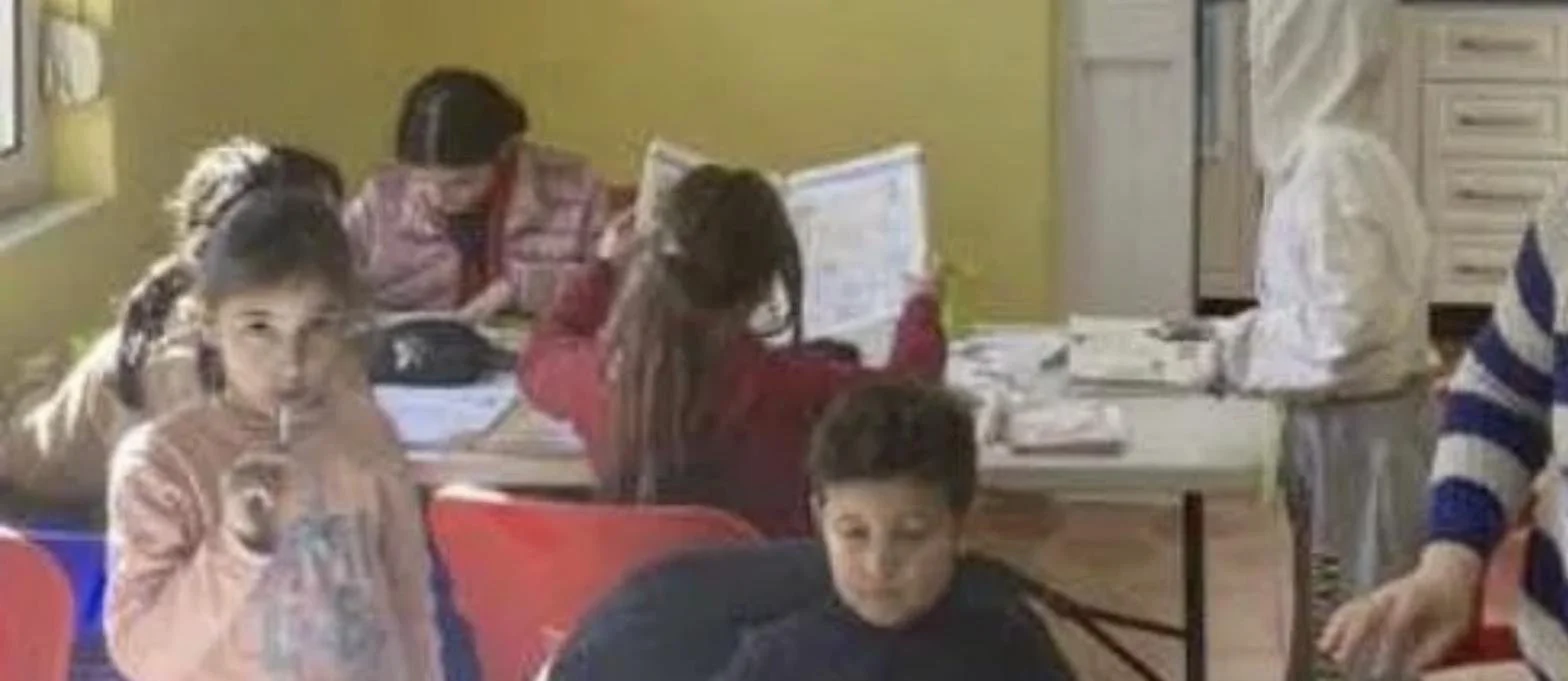
Every week, around 120 children come through our Skills and Education work in Tirana and Durrës. Sixty-three come to homework clubs three times a week — a warm room, internet, printing, and someone patient sitting alongside them: everything a middle-class home provides without thinking, gathered into one place for children whose homes cannot provide any of it. Fifty-seven learn English in our Horizons groups. Thirty-two refugee families are learning Albanian so their children can enter school and their parents can find work. Twelve children with additional needs receive one-to-one support each week — sensory activities, help with communication, an individual learning plan built around what that particular child needs, not a generic programme — matched to exactly what their own school cannot yet provide.
And behind all of it runs the quietest, most important work we do: ten years of partnership with local state schools — negotiating with head teachers, walking families through enrolment, providing the therapy through our clinics that makes a classroom possible for a disabled child, and simply refusing to accept that any child has no place in a classroom.
Some of those children would otherwise be begging. That is not a figure of speech. It is a case file.
“[A ten-year-old boy] had not previously attended school at all. At first he received individual learning sessions, so that he would not fall behind in essential knowledge despite never having been in a classroom. It was incredibly rewarding emotionally to witness the joy in his eyes upon returning from his first day of school — finally able to join his friends in their educational journey. Education opens doors for him to pursue his dreams, a possibility that would have been out of reach had he not attended school.”
Eralda Kodheli — Skills Coordinator, TiranaThe second half of the bridge
Education that stops at the school gate doesn't lift a family out of poverty — especially where discrimination means a certificate is worth less in some hands than others. So we walk with people all the way across the bridge. Over the past decade, alongside our Recovery team, that has looked like:
A young man who now runs his own mobile hairdressing business. A father holding down steady work in a café — with someone alongside him for the long haul, because keeping a job is harder than getting one when nobody in your family has ever had formal work. A man with his own carpentry business. Young adults finishing school and going through university — including young women whose fees we covered so they wouldn't have to drop out. Two women, once at risk of taking the irregular route to Britain, now training as professional hairdressers. A young man following a call into ministry as a pastor. People into courses, into factory jobs, into micro-loans and small livelihoods. A man who came back to Albania after a failed asylum claim, rebuilding a life in a country where — the International Organization for Migration found in 2025 — nearly half of returnees are unable to find work. A teenager walked away from the pull of the gangs. And through all of it, women stepping into leadership — including the remarkable Albanian women, Eralda and Ilsa, who lead this entire programme.
Thirty-four people moved into legal, dignified employment through Tek Ura in the past year alone. Each one is a household where the story changes — where the children grow up with a working parent, a lit room, and the assumption that school is where they belong. The cycle that ran downhill for generations starts, in those families, to run the other way.
“A child helped with homework by lamplight becomes a mother whose children will never beg.”
— a hope we hold onto, watching families cross this bridgeWhy I'm telling you this
Because you built this. Truly. When I say you are not donors but partners, I mean it in the most literal way: without you, the room is dark and the club doesn't meet.
And because the story is bigger than us. What ten years in Tirana and Durrës demonstrates is that the children everyone had written off — the children of the settlements, the children with complex disabilities, children whose families have depended on begging to survive — flourish when someone moves the barriers and stays. Not sometimes. Consistently. They finish school. They build businesses. They lead. The question was never whether they could. The question was whether anyone would stay long enough to find out.
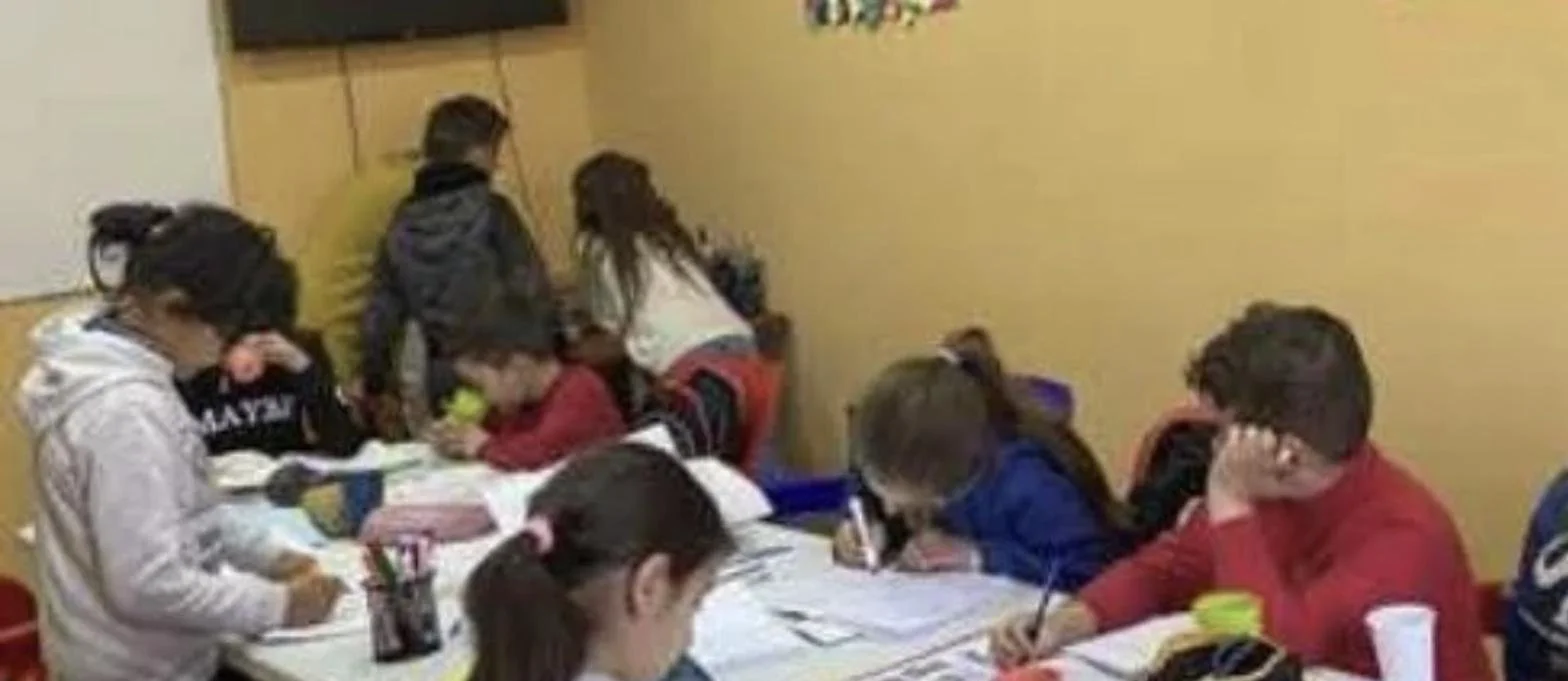
That is what the gospel looks like in a homework club: belonging before believing, a table where every child has a seat, and the patient conviction that every single one of them is made in the image of God and made to flourish. Many of the families who first came for homework help are now part of Komuniteti i Besimit, our church family across the two cities. The bridge from the street to the classroom, it turns out, often carries on to the Table.
“It is wonderful to be leading these groups with women in Durrës and seeing real growth — more people coming, and the bonds between them growing stronger every year. My hope and prayer is always that God's word will go deep into their hearts, and that they will know Jesus with mind, soul and heart.”
Ilsa Basha — Skills Coordinator, DurrësHow you can respond
The homework clubs, the school advocacy, the therapy hours, the university fees, the hairdressing training — all of it costs roughly £350 per child per year, and nearly all of it is carried by the prayers and giving of ordinary Baptist church members across the UK. Around thirty churches now stand with us.
Faleminderit shumë — thank you very much — for ten years of building this bridge with us. The children crossing it now will spend their whole lives on the other side.
Lavdi Zotit. The best is yet to come.
For use in assemblies and all-age services
This article works well read aloud or adapted for a mission slot, all-age service, or school assembly on fairness and access to education. Three questions to open discussion, for any age:
- The girl in this story says “everyone else seemed to understand… but I didn't.” Have you ever felt like that — at school, at work, anywhere? What helped?
- She ends by saying “sometimes I'm even the one helping someone else.” Why do you think teaching someone else what you've just learned can make you understand it even better yourself?
- What would it look like for our church to be a “homework club” for someone nearby — not necessarily about school, but about turning up, being patient, and not laughing when someone gets it wrong?
Daniel Dupree is Executive Director of Qendra Tek Ura, Albania, and Co-Leader of Vale Community Church, Marston Moretaine, currently serving in a hybrid role between the UK and Albania. Dan and Annie began cross-cultural mission service in 2006/07, first in France and then Tunisia, and have been based in Albania since 2014. The child in this article is not named, and her testimony is shared with her family's full knowledge and consent; Tek Ura staff are named, and quoted, with their own consent as members of the team. Eralda Kodheli's reflection is taken from her own first-person account in Tek Ura's Annual Impact Report 2023, with the child's name replaced by a description; Ilsa Basha's reflection is lightly trimmed from her own written report to the team. dan@tekura.org · tekura.org
